media

Labels

Showing posts with label Telecom Equipments. Show all posts

VoIP business worldwide from Then and Now

VoIP was invented in Israel(1995) by a company called VocalTec. The insufficient availability of telephone and high cost lead to the foundation of VoIP. 

Today, VoIP worth more than 100 billion $ worldwide.

After 3 years of invention, in 1998 VoIP calls account for less than 1% of total calls and in 2000, it accounts for 3% of total calls. By 2003, there were total 7 Billion $ revenue from VoIP. The telecom operators were struggling and thus the charge for calls were almost half. 

The early days of VoIP began with the international long distance communication. The cheaper rate was the main concern over its development. This effect was seen on the telecom operators. The operators began to sustain by purchasing the VoIP from International Exchange Carriers and deployed it by offering at a cheaper rate.

In 2005, VoIP vendor, iBasis alone transacted around 7.7 Billion voip minutes. Skype , a global internet VoIP service provider, has gained over 75 million on-line subscribers in just over two and a half years, after its launch in 2003.

When VoIP took aggressive market, telecom providing POTS where loosing $10 Billion per year from 2001.

In  2000, US company AT&T , Verizona also deployed the system which are capable of supporting VoIP service.  

In June 2004, Vonage, broadband service provider, say the average American phone bill is $72 a month, but vonage provides unlimited calls throughout the United States and Canada for $34.99 a month.
Telecom operators were fighting to keep their customer from cable companies.

By April 2004, Skype has 10 Million users.

In the same year, a research firm says, nearly 62% of North American  businesses , have already switched to internet telephony, either entirely or in part.

By 2010,the fixed line telecom revenue may fall by 25% due to VoIP. Mean while the mobile operators loose revenue by 80%.

However, there were no Emergency call facility in VoIP. FCC takes a bold steps, saying all vendors should provide this service. At the same, VoIP was on track to exceeded $1 Billion in revenue with over 3 Million users.

According to Future Market Insights, In 2012, the corporate consumer VoIP market registered 98.9 billion subscriber, accounting for US$43.27 billion in global revenue.
It also forecast an increase to around 204.8 billion corporate consumer by 2020, accounting for US $86.20 billion in global revenue.
There are about 688 businesses in VoIP industry.

Signalling system 7 (SS 7) and its network:

Signalling system 7 and its network:


Common channel signaling technique, using a separate network of computer to send and receive message as signals, has been adopted by ITU as CCIS7 and is referred to as SS7.
Prior to SS7:


1.       When a long distance was made , the call was connected  to exchange by exchange through the long distance network.
2.        On calls to a busy telephone, the call  would be established over the network and tie-up numerous circuits in the PSTN just to return a busy signal from the far end exchange.


a.       When a call is placed over the long distance network, the exchange (connected to the calling subscriber) will launch a query over the SS7 network to establish a call setup path and to test the called subscriber.
b.      If the called party is busy, a busy signal is returned to the calling party of the originating exchange.
c.       If the called line is idle, the SS7 now issues signaling message to each exchange that will be used to connect the call.
d.      Each exchange will communicate over SS7 network and identify the free circuits to be used between each exchange for the voice  circuit and trunk circuits are reserved for the call.
e.      A signal is set to the terminating, instructing it to ring the called line.
f.        The caller receives the ring back tone from its originating exchange.
g.       When  the called party answers the call, the reserved trunks are then connected and voice circuit path is completed between the calling and called parties.
h.      SS7 is a network of its own.


This network consists of 3 major parts: STP, SCP and SSP
A)     Signal transfer point(STP):
a)      It is a packed based switch.
b)      It receives and send message signal to proper destination.
c)       It also forms specialized routine function.
B)      Service control point (SCP):
a)      This node acts as a database which provides the information for the advanced call in the network.
C)      Service signaling point(SSP):
a)      This node is the end exchange equipped with SS7 enabled software and having signal lines.
b)      Every  will have SSP to connect with SS7 network.
c)       SSP’s behaves like an exchange for different functions like starting the transmission as well as termination of the line in the network.
d)      SSP’s are connected with other STP’s and SCP‘s in the ss7 network.

Interference in mobile/cellular communication

Interference in mobile communication:

Pic: Interference in between two water waves

The limiting of available electromagnetic spectrum results in the time congestion which results in interference. The interference can occur from clash with another mobile in the same cell or because of a cell in the adjacent cell. There can be interference between the base stations operating at same frequency band or any other non-cellular energy leaking inadvertently into the frequency band of the cellular system. If there is an interference in the voice channels, cross talk is heard and will appear as noise between the users. Moreover the interference also depends upon the area and population. The interference can be divided into 2 parts: co-channel interference and adjacent channel interference.


1. Co-channel interference(CCI): For the efficient use of available spectrum, it is necessary to reuse frequency bandwidth over relatively small geographical areas. However, increasing frequency reuse also increases interference which decreases system capacity and services quality. The cell where the same set of frequencies is used are called co-channel cells. Co-channel interference is the cross talk between two different radio transmitters using the same radio frequency as is the case with the co-channel cells. 
     The reasons of the CCI can be because of either adverse weather climate or poor radio frequency planning  or over crowded radio spectrum. If the cell size and the power transmitter at the base stations are same then CCI will become independent of the transmitted power and will depend on radius of the cell(R) and the distance between the interfering co-channel cells (D). if D/R ratio is  increased, then the effective distance between the co-channel cells will increase and interference will decrease. The parameter Q is called the frequency reuse ratio is related to the cluster size. For hexagonal geometry:
                              Q=D/R=
The effect of  co-channel interference can be minimized by optimizing the frequency assignments of the base stations and their transmit powers. Tilting the base station antenna to limit the spread of the signals in the system can also be done.

2. Adjacent channel interference (ACI):  This type of interference is caused by adjacent channels i.e. channels in adjacent cell. It is the signal impairment which occurs to one frequency due to presence of another signal on a nearby frequency. This occurs when imperfect receiver filters allow nearby frequencies to leak into the passband. His problem is enhanced if the adjacent channel user is transmitting in a close range compared to the subscribers receiver while the receiver attempts to receive a base station on a channel. This is called near-far effect. 
The more adjascent channels are packed into the channel block, the higher the spectral efficiency, provided that the performance degradation can be tolerated in the system link budget. This effect can also occur of a mobile close to a base station transmits on a channel close to one being used by a weak mobile. This problem might occur if the base station has problem in discriminating the mobile user from the “bleed over” caused by the  close adjacent channel mobile. 
Adjacent channel interference occurs more frequently in small cell clusters and heavily used cells. If the frequency separation between channel is kept large this interference can be reduced to some extent. This assignment of channels is given such that they do not form a contiguous band of frequencies within a particular cell and frequency separation is maximized. Efficient assignment strategies are very much important in making the interference as less as possible.

Internet phone systems for small business

Internet phone systems for small business: May2017 


Internet Phone is also called IP phone. Such phone uses internet for voice call. It doesn't utilize the traditional GSM/UMTS system rather such phone system uses some application or firmware to do phone over internet. One of the prior example is Skype, Viber etc which uses data to transmit our voice. So, the Internet Phone is grasping many enterprise, corporate's and small business  attention since it is cheap & affordable. Ultimately it is reducing the overall cost of business and maximizing the revenue.


Now lets scrutinize the top IP phone system for small business. The getvoip have reviewed and listed the top voip phone system for small business including prices, features, money back guarantee and reviews. It also provides tool which will help in making the decision to choose the right system as our need. 
I have listed the screenshot of the top trending Internet Phone providers.


You can see in above picture that Nextiva is the leading followed by RingCentral, Mitel and Vonage business.
You can also visit their respective sites just by clicking below link.
1. Nextiva 
3. Mitel
4. Vonage


These are the top 4 trending Internet Phone providers for small business. 


Other trending search includes below:
1. Business phone and internet
2. Internet phone service for business
3. Internet and phone for small business
4. Internet phones for business


Business VoIP service providers

Best Business VoIP service providers

VoIP business makes almost about 80-90 billion $  per year. More than 500 business VoIP services provider are across the globe providing services to small business company and  large business company. The reason why VoIP service is more common in business is that it is cheap and flexible which cutoff the operating cost of the organization. Some business and individual have reported a price cut off up to 80 percent after they switched to VoIP. 

The main thing is that VoIP is getting more and more popularity in these day. According to fortune.com, telecom company count total of $386 billion lost revenue due to Skype,WhatApps,Viber, etc, in between the year 2012-2018.
Additionally, according to globalnewswire.com, it is expected that, VoIP market will grow from 80 billion to 140 billion $ by the year 2021.

I have listed the top 8  Business VoIP service providers. These are as follows:

1. RingCentral office: The company started out in 1999 focusing on small businesses and has since grown into a serious, enterprise-capable player, delivering a mature cloud-deployed Private Branch Exchange (PBX) with advanced features like a developer platform and open API. 

2. Vonage Business: Vonage Business offers the right VoIP features for small-to-medium-size businesses, and its call quality is excellent. But it's less simple to set up than some competitors, and some of the features cost extra.

3. 8x8 Virtual Office Pro: 8x8 Virtual Office Pro is a great choice for SMBs looking for flexible VoIP telephony services with advanced features, mobile capabilities, and a decent selection of integrations with popular third-party apps.

4. Dialpad: A solid VoIP product with a good set of features and competitive pricing, Dialpad is a great example of the melding of web and VoIP technologies. Excellent call portability and the ability to integrate tightly with other office apps make this a platform to consider.

5. Fonality Hosted PBX: Fonality offers advanced features for office phones like multiple auto attendants, call recording and contact center functionality like barge, whisper and monitor to communicate more efficiently between your agents and customers.

6. ShoreTel Connect Cloud: With its solid pedigree in VoIP PBX systems, ShoreTel Connect Cloud offers numerous deployment, integration, and feature options that should fit the needs of most businesses. 

7. Citrix Grasshopper: With its solid pedigree in VoIP PBX systems, ShoreTel Connect Cloud offers numerous deployment, integration, and feature options that should fit the needs of most businesses.

8. Microsoft Skype for Business Online: Succeed and servicing over a decade, it is widely popular not only in developed countries but also on underdeveloped countries.

The source is pcmag. 

VoLTE | Difference between VoLTE & LTE | Rise of VoLTE

VoLTE | Difference of VoLTE & LTE | Rise of VoLTE

In this post,  we are going to cover major topic but not limited to:
1. What is VoLTE stand for?
2. Brief Introduction of LTE and VoIP
3. Difference between VoLTE and LTE?
4. Advantages of VoLTE | Rise of VoLTE

VoLTE stands for Voice over Long-Term Evolution. In order to master the VoLTE we need to know major two terms LTE and VoIP. I will explain briefly on these two topics:

LTE: It's acronym is Long-Term Evolution. It is also called as 4G. However, as defined by ITU- International Telecommunication Union, 4G must have at least 100 Megabits per second on peak speed which means that when we are in moving vehicle or train.  when we are stationary, there must be around 1Gigabits per second. But this was not much possible as there is undergoing research. 
So the substantial improvement  in 3G lead on a point such that they can be classified as 4G and thus named as LTE. LTE sole purpose is to solve the rampant increase in demand of data with using existing technology. 

VoIP: It is the technology, that will transmit the voice using IP or packets without using conventional circuit switched technology. Details of VoIP is here.

    
Since, LTE is truely IP based i.e it only supports packet switching with its all IP network.  This is good when we are using data service, but what will happen if call is initiated or received??
So for this problems, LTE have 3 different options:
1. VoLTE
2. Circuit switched fallback: In this method, when call is initiated or received, the Control signal and Traffic signal switched over to 3G or 2G providing  the circuit switched transmission of voice. 
3. Simultaneous Voice and LTE (SVLTE):In this method, the mobile handset use both LTE for data service  and Circuit switched for voice transceiver. 


Rise of VoLTE:

Due to circuit switched fallback, there is substantial decrease in voice quality since, for every time the call is made and received , the connectivity of LTE gets disconnected and switched to 3G/2G. This delay between switching ,which result is cal drop, poor voice quality, cross talk,etc. Also LTE was previously developed only to improve the data service but wasn't careful on Voice.  So to incorporate this problems of voice call, there have been developed of VoLTE. 

VoLTE is just a software (OS)which will be installed in the UE(user equipment) and the LTE network. Since LTE network is a hardware whereas VoLTE is a software. So now ,when the call is initiated, the voice will transmit over IP or data service instead of circuit switched technology. That means our phone now will not use the voice channel but will use the packet or data service channel in the form of Packet. This enables the use of higher bandwidth for voice transmission and thus there will be superior quality of voice.

So using VoLTE in LTE network provides the transmission of voice in the form of packets or IP over data service. There are many handsets that supports the VoLTE and many carriers which are implementing the VoLTE technology. 

As of 2017  January , the total operator deploying VoLTE has reached 40, over their LTE network.

Many handsets are available which supports VoLTE.


Battery Bank and It's Importance in Telecom

Dear Members, we are now completely upgrading this blog to our own website named telecomkhabar. we are now discontinuing this blog and new content will be available in https://www.telecomkhabar.com. 
This article is now being moved to this link named Battery Bank importance in telecom. 


After successful completion of reading this post, you will learn!!!

a) Why 2V battery is used in telecom industry??
b) Do site gets down, when battery gets damaged??
c) Details of outdoor sites and indoor sites
d) Choice for no of batteries used in site??


Pic(a): Single BB of 12V each with 12 batteries

Collection and arrangement of Battery is termed as Battery Bank or shortly BB. Battery Bank consist of few minimum 4 batteries to maximum no. of batteries as required. Battery Bank in telecom industry is most common for power backup which may need during AC line faulty. Battery bank is used to store current of Photo voltaic energy, AC rectified to DC power or Diesel Generator power.


Batteries are kept in the cabinet or in the dorm as per the site location and feasibility. Cabinet is used where the site is outdoor. Outdoor site is where BBU, DCDU, battery bank,and everything equipment is kept in a closed box sealed such that no water enters into it under the open sky. Pic(a) is clear example of outdoor site where battery bank is kept in the cabinet for protection from direct sunlight, water and direct air.


For indoor site, where every equipment is kept inside the shelter or in the room, batteries are kept in the dorm. This saves the cost of the cabinet. The Pic(b) below shows the example of indoor site and battery placement in the dorm. 


Pic(b): Two BB with each 2V, 24 batteries in each bank
In the Picture above, Pic(a) consists of 16 batteries and Pic(c) consist of 48 batteries. The choice for the number of batteries on the desired site depends on the following two important reasons:

1) For the Hub site(multiple links from same site is done): more batteries with more power is installed for providing microwave link until last minute because multiple links are operated by the same site.
2) For very busy traffic areas:places where users traffic is high and need to provide continuing services, more batteries for longer power back is kept.


Most of the telecom equipment's are made to run in negative voltage because  for the protection for high voltage lightning. So the batteries are arranged to give maximum of -48V.
Don't get confused, positive terminal of battery is grounded and negative is used to give up -48v.
Batteries are arranged in series to sum up for 48V and then more batteries are connected in parallel. Parallel connections provide long lasting current for the same output. That is why more batteries are kept and connected in parallel in HUB and High Traffic sites.

Telecommunication field is crucial as communication is very important. If there is power failure then the site gets down and whole communication of the site as well the link of other site is also down. Suppose if single 2v battery get damaged, then we can replace instantly that battery but still there is -46 voltage and sites don't get down because the telecom equipment's run upto -44v. If we used battery of more voltage then if by change battery gets damaged or need to replace then the sum of voltage will gets down below 44v and the sites gets down. Due to this reasons, at least 2 parallel connections and 2v battery is mostly used.

Most common battery used are of Shoto, Agission, Northstar,   Exide etc.

If you find this post useful, please give me thumps up by like and share or if something is missing or if you want more concept, ideas and details of other telecom equipment's please leave comment in the comment section below. I will  include those topics in my coming post. Thank you


BBU-Baseband Unit- in Telecom

BBU-Base Band Unit

This whole blog article is being shifted to BBU Base Band Unit in Telecom . Dear All, we will now post new article in this website named www.telecomkhabar.com . Please use this website and suggest me so I can give you a good concept and knowledge. 

Thank you for supporting me for last 4 years. 

Base Band refers to original signal or un-modulated signals ie signals which occupies the lowest range of frequency spectrum. BBU processes the signal of original frequency before it is modulated. 

In Base band, Frequency band is not shifted to some other frequency band by means of modulating.

BBU have DSP(DIgital signal processor) that process the conversion of signals conversions between analog and digital signals. It is also known as heart of communication because it serves for communication link between two end users. 
BBU along with RRU (Radio Remote Unit) formed as a BTS. RRU process the incoming and outgoing radio signals. RRU sends the signals and receive signals (EM waves) from Antenna through hollow guided Jumper .BTS is Base Transceiver station. BBU is connected with RRU through CPRI-Common Public Radio Interface fiber cable for making BTS. 


Fig: Typical  BBU of Huawei 3900 Series 

Functions of BBU-

1) Provides common public radio interface (CPRI) ports or optical links for communication with RRUs and processes uplink and downlink baseband signals.

2) Provides S1 ports for communication between an E-UTRAN NodeB (eNodeB) and an
MME/S-GW, and X2 ports for communication between eNodeBs.


3) Provides clock ports for clock synchronization, alarm monitoring ports for environment monitoring, and a Universal Serial Bus (USB) port for commissioning using a USB flash drive.

4) Manages the eNodeB through operation and maintenance (OM) and signaling message processing.


As in above figure, commonly BBU consists of FAN, LBBP, UMPT, UPEU and other slots where necessary cards is inserted for needed operation. Brief description of each above components is given below:

a) FAN: The FAN dissipates heat from the BBU3900. It monitors the inlet temperature, controls the rotation speed of the fans, and reports the status of the fans to the LMPT or UMPT in the BBU3900.

b) LBBP: LBBP stands for LTE Base Band Processing Unit. Huawei 3900 series have 3 different LBBP, LBBPa, LBBPb and LBBPc. But in Huawei BBU 3910, LBBP is termed as UBBP. LBBP and UBBP difference is that LBBP is for LTE or 4G communication while UBBP is for 2g and 3g communication. UBBP also have type 3 and type 2 cards, UBBP2 and UBBP3. These both LBBP and UBBP functions is to:

    1) Provides CPRI ports for communication with radio frequency          (RF) modules.
    2) Processes uplink and downlink baseband signals.

 
Fig: UBBP2 and UBBP3 cards and CPRI cable shown in Huawei BBU 3910


c) UMPT: UMPT stands for Universal Main Processing and Transmission Unit. Its functions are:
 1) Performs OM functions, including configuration management, equipment management, performance monitoring, signaling processing, and active/standby switchover.
 2)Provides clock reference,transmission ports,and the maintenance link connecting to the OMC.The OMC can be the LMT or M2000 client.

d) UPEU: UPEU stands for Universal Power and Environment interface unit. Its functions are:
 1) Converts power of -48v input into +12V with 300 watt and 650 watt power needed for BBU operation and Processing.
 2) It takes EMUB signals through RS485 serial communication and converts into Boolean signals. Thus acts as interface unit for BBU and EMUB unit. EMUB is Environment Monitoring unit for sensors alarm.

BBU consists of GPS sensors or device which track the BBU installed location and if BBU is stolen or theft the GPS coordinate is traced and send back to telecom operator control room.

There are many BBU models manufactured by various telecom operators. The top 5 telecom equipment manufacturer are Ericsson, Alcatel-Lucent, Huawei Technologies, Cisco Systems and ZTE Corporation. These vendors have their own type type BBU model though the basic knowledge is same. The different is that of their power efficiency & processing and working speed.


If you find this post useful, please like and share or if something is missing or if you want more concept, ideas and details of other telecom equipment's please leave comment in the comment section below. I will try to include those topics in my coming post.


4G in Nepal!!! Is really a 4G or LTE??? It’s Scope and Hurdles…

4G in Nepal!!! Is really a 4G or LTE??? It’s Scope and Hurdles…


Finally,Nepal government, Ministry of Information and Communication have decided to adopt a technology neutral policy to allow operators to lunch 4G using the 1800-MHz. So now operators can lunch the 4G service to its customers.


Before few weeks, Nepal Telecommunication Authority(NTA) : a government head body that monitors, governs and regulates the telecom operators  in Nepal: announces  that  it is preparing for the frequency spectrum , frequency distribution and cost analysis &  also announces for submission of proposal  for 4G operation to the operators. This declaration has opened the door for the telecom Operators to lunch the 4G LTE service in Nepal. This announcement has been taken a good response from the public people as well.

Is it really a 4G or LTE???

4G is the 4th generation mobile data service with its high speed download and upload of packet data.

LTE is Long Term Evolution as the next generation data service aimed to fulfill the demand of 3rd generation data scarcity. LTE have been constantly developed and improved. So LTE-A (A-advanced) is the next generation LTE service. LTE can be upgraded with the utilization on ongoing GSM and UMTS carrier.

Many of us and even operators have been consciously used the term LTE and 4G interchangeably. Technically they are different.  4G define the D/L (Downlink) data rates of 100Mb/s during high mobility i.e during travelling with high speed on bus, trains & 1 Gb/s during stationary. Now let’s examine the speed on those countries where 4G is deployed. The above speed has not been achieved yet. Cellphone power, cell phone antenna, MIMO (Multiple Input Multiple Output), carrier aggregation, etc. are the several technical challenges behind this.

However, on contrary LTE defines the theoretical speed of 100Mb/s as D/L. The practical speed has been varied among operators. It is based on the GSM/EDGE and UMTS/HSPA network technologies, increasing the capacity and speed using a different radio interface together with core network improvements. LTE have been in operation in 16 countries as of 2015 and is being deployed by 140 operators in 56 countries.

The two major operators NT and Ncell on their statement expressed, they are willing to lunch the 4G LTE service. 
NT plans to provide within all 75 districts of Nepal 4G service by 2017/18 but it hasn’t been able to keep up its place to meet its targets. Since, NT still hasn’t provided 3G service to all over Nepal. Its in the expansion process. So to meets its target is yet dubious and challenging itself.


Ncell now owned by Axiata Group, a competitor of NT has been  focused on quality services with adaption of 3G. Focusing on major cities, it has already provided 3G services. Ncell have shown keen interest for adoption of 4G-LTE  before few months. At that time even NTA had not been prepared and planned for frequency distribution .

5 Essential Tools that Every Telecom Engineer should have on their bag

Being a Telecom Engineer and executing the task is itself a difficult job. Telecom Engineer should always be smart, diligent, sharp, active and problem solving beyond every new faces of problems. 
We should troubleshoot problems no matter what the problems is. 

I have listed top five tools that will help every Site or Telecom Engineer to solve majority of problems. 

1) RJ45 CAT5 Network LAN Crimper Tools, LAN Cable, LAN Tester and CAT-5 connectors:

Lan Crimper along with few(5-10m) LAN cable is very necessary. Few pieces of around 20 connectors will add a life in our task. We can now easily make new LAN cable and use it where we need. 

 We can now even check the existing lan cable faulty with our LAN tester and we can easily replace the existing LAN cable. We can use also use the same LAN cable for interfacing and commissioning new devices as required. So it has been a essential tools that we should not forget under any circumstance.

2) Screw Driver Set: Screw driver is general and multipurpose tools that every technicians and engineer should carry along with them. It accomplished different works.
 It can be used to open the different cards of BBU, RRU and even different Transmission Equipment's like CX, OSN, CISCO, Alcatel,etc. If you find it more bulgy and heavy, never miss the two set tools +/- in big and small size in your bag.

3. Tie Cutter with few Black and White cable tie: To clamp the cable in proper order, we need cable tie. Routing with proper tie makes the site and cables good looking.


Tools is simple but has great use while routing, fixing new and old cables in proper places. Generally Black tie is used at outdoor and white tie is used at indoor. 

4. Multimeter: No matter what new devices and equipment, whom with we play: 
Multimeter has its own remark in the Telecom Engineering. Most common, most versatile and most needed devices that every telecom engineer must posses. Power failure, short circuit, continuity test, current measurement, voltage measurement, resistance measurement,etc are done by multimeter. It has been a major tool for troubleshooting telecom equipment and devices.


5. Labels: Labels are need to show where the cable has been gone and where it ends. In BTS we can see large number of cables routed here and there. If we don't label the cables properly we may incorrectly plugged in and out of other cables and may risk in "site down". " Imagine- If it was a Hub site, then the whole city or region may go silent". The result is worse and even scary. So for proper labeling at both end, we must have either printed or hand written label. So we should always carry blank label in our bag so we can used it for temporary in case needed. 

We can see the labeling done at Fiber Cable , and thus we can easily know where it has been routed. 

I have listed major 5 tools above. Let me know other tools in the comment section below which I have not listed.

CPRI Cable Function and Details in Telecom

After successful completion reading of this post you will know!!!

Dear All, we are now having our own site named telecomkhabar. This article is now moved into the new link as CPRI functions in telecom. Please follow the new site for new updates as this blog is now discontinued. 
Thank you for supporting for 4 years. 


a) What is CPRI cable?

b) Use of CPRI cable in telecom
c) Interconnection of CPRI cable in BBU and RRU
d) CPRI connector details or Fiber connector types


CPRI stands for Common Public Radio Interface.


CPRI is the world standard interface defined for Radio Equipment Controllers(REC). REC are basically Base Band Unit(BBU), Remote Radio Unit(RRU) in telecom industry. CPRI standard is followed by top leading telecom equipment manufacturer like Huawei,, Ericsson,Nokia,NEC,etc.


CPRI is optical fiber that carry signals whether it is control or message. Control signals are the controlling signal that carry information of the status of the equipment installed in the BTS and other various traffic related control signals. Message signals is the information related to user communication. 


CPRI supports multi mode communication and doesn't support single mode communication. In optical fiber, single mode communication is that where single light is transmitted between two radio equipment for communication and data transfers whereas multi-mode supports more than one light to be transmitted through the same single optical fiber link at a time. Thus multi-mode is used for communication in very short distance whereas single mode is used for long distance communication because of low loss in single mode fiber.


Pic: SFP for Optical Fiber(CPRI) connection 


Below is the chart of the Optical fiber connector types: (source:Alibaba)


Among most of the connector types, LC-Duplex is very common in Telecom Industry for connecting BBU and RRU. 


LC-(Simplex and Duplex) is a push on,pull-off, multimode or singlemode fiber type of connector containing a standard RJ 45 telephone plug housing with a ceramic ferrule in a simplex or duplex plastic housing; SFF(Small Form Factor)and SFP(Small Form Pluggable) designs are suitable for high density interconnection and also useful for instrumentation and test equipment interconnections. It have insertion loss of  0.1 to 0.5 dB. 


If you find this post useful, please give me thumps up by like and share or if something is missing or if you want more concept, ideas and details of other telecom equipment's please leave comment in the comment section below. I will  include those topics in my coming post. Thank you


DCDU-12B:Direct Current Distribution Unit of Huawei

DCDU-12B
Direct Current Distribution Unit

Dear All, we are now upgrading this entire article into our new website. This article is moved to DCDU functions details. Please follow this site for new articles and post. Thank you for your continuing support for the past 4 years. Your comment and feedback is really needed to grow. Thank you.


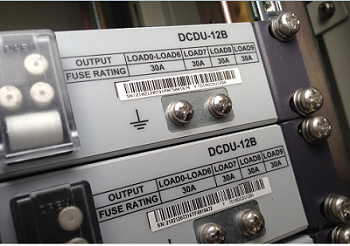
It is the DC distribution unit or device. It serves for distributing the DC power needed for different power needed devices like RRU, EMUB, BBU and many more. DCDU-12B of Huawei consist of two input terminal blocks and 10 different ports for output. Each port or certain port is assign for its maximum output fuse current.

Pic: Two DCDC-12B installed for powering RRU


Huawei DCDU-12B have following features:
1. Input -48v,160A
2. Output; -48v-30A in each slot compromising 10 slots
3. working environment: -40degree to +65degree
4. Operating elevation: 0-3000 meter.


Below DCDU-12B is labelled with rated for maximum fused current at 10 different ports.

Pic: Two DCDU-12B installed and showing rated Fused Current at each load/output

Due to its compact and light weight, low temperature working capability, fused protection and embedded installation: this PDU (Power Distribution Unit) is widely famous and is used in Telecom, BTS, Mobile, Electric Power, army, public securities,and many more places.


If you find this post useful, please give me thumps up by like and share or if something is missing or if you want more concept, ideas and details of other telecom equipment's please leave comment in the comment section below. I will possibly include those topics in my coming post. Thank you

EMUB Details in Telecom

EMUB of Huawei Telecom Technology

EMUB stands for Environment Monitoring Unit Type B. EMUB is the Alarm switching unit. It controls, switch, monitor and send signal to BBU (Base Band Unit) to control room or Knock Operator of the telecom operator via Microwave link.

Huawei have its various sensors connected to different location of the BTS or Site(location of tower).

Pic: EMUA of Huawei 


Different sensors like Flood, Smoke, Temperature, Door, Fuse Fault, DC under voltage, Load on DG and many more are connected to various locations of the BTS cabinet or Site. Like, Flood sensors is connected to few inches below of the BTS room , Door sensor is connected to door of the cabinet and Smoke sensors is installed at upper side of the BTS cabinet or shelter. These sensors give value as measured or configured to the EMUB and EMUB process the sensors given value and sends as according with priority to the control room via BBU and Microwave link. EMUB can handle multiple sensors input and processes it. EMUB is commissioned such that each port is prepared for the desired sensors input only.

EMUB have 32 input ports for taking input of various sensors. It sends those sensors value via DB9 male RS485 cable to BBU end connected in RJ45 female connector.


Pic: DB9 Male connector


Shortly, RS485 is standard communication protocol designed for communication between two device ensuring smooth data transmission mitigating adverse path loss and ensuring safe communication.


It is the serial communication. EMUB sends all those port signals via serial communication to BBU. BBU manipulates it and sends to control room of telecom. For unusual alarm, necessary steps is taken by the operator. 


Pic: Sensors Labelled at EMUB port

The sensors output are connected to EMUB via Lan Cable(RJ-45) through with in 32 switch signal check port. For future understanding, predefined sensors output is labelled at EMUB indicating sensors.


Among 32 switch signal check port, I have listed 8 port list with their commissioned configuration for selected sensors.


     EMUB Switch Port (For ICC 500 Power Plant)
  Alarm Details
S1+, S1-
Temperature control unit fault
S2+, S2-
 Door
S3+, S3-
 PSU Fault
S4+, S4-
 Fuse Fault
S5+, S5-
 Temperature


S6+, S6-
 DC under voltage
S7+, S7-
 Mains Power Failure
S8+, S8-
 SPD Fault


EMUB of Huawei in Telecom controls and monitor Environment factors and send results to control room ensuring safety and necessary precautions is undertaken without any major loss.


If you find this post useful, please like and share or if something is missing or if you want more concept, ideas and details of other telecom equipment's please leave comment in the comment section below. I will try to include those topics in my coming post.